Asbestos in Floor Tiles: What UK Homeowners Need to Know
Millions of pre-2000 UK homes have asbestos floor tiles. Most are safe if left alone — but the moment you start lifting, sanding, or scraping, the risk changes completely.
Why Floor Tiles Are One of the Most Overlooked Asbestos Risks
Most homeowners think of asbestos in garage roofs or ceiling tiles. Floor tiles rarely get the same attention — yet they are one of the most widespread asbestos-containing materials (ACMs) in UK housing stock. The Building Research Establishment estimates that asbestos-containing floor tiles were installed in millions of properties built between 1945 and 1985.
The reason they are so commonly missed is straightforward: they look ordinary. A 9×9 inch vinyl tile from 1965 is visually identical to a modern equivalent. There is no colour, texture, or marking that distinguishes an asbestos tile from a safe one. The only way to know is laboratory analysis.
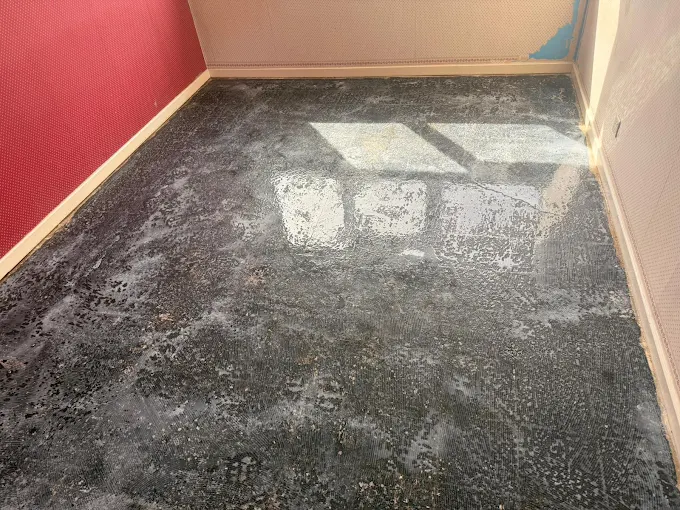
What makes the situation more complex is the adhesive. The black mastic used to fix tiles to concrete subfloors often contains higher concentrations of asbestos than the tiles themselves — sometimes up to 50% chrysotile by weight. When tiles are lifted, the adhesive is disturbed. When adhesive is scraped off, fibres are released. This is where the real risk lies.
The Adhesive Beneath the Tile Is Often the Bigger Risk
Chrysotile fibres in intact vinyl tiles are bound within the matrix and pose minimal risk when undisturbed. The black bitumen-based adhesive beneath, however, becomes brittle and friable with age. Scraping it releases fibres directly into the breathing zone of anyone working at floor level. The HSE's Control of Asbestos Regulations 2012 (CAR 2012) classifies adhesive removal as licensable work in most circumstances.
Types of Asbestos Floor Tiles Found in UK Properties
Five main categories of asbestos-containing floor products were used in UK construction. The period of installation is the most useful indicator — if your property was built or refurbished between 1945 and 1985 and the original flooring is still in place, treat it as potentially containing asbestos until proven otherwise.
| Tile Type | Period | Risk |
|---|---|---|
| Vinyl floor tiles (VFT) | 1950s–1980s | Moderate |
| Thermoplastic floor tiles | 1950s–1970s | Moderate |
| Asphalt floor tiles | 1940s–1960s | Moderate–High |
| Cushion vinyl / sheet flooring | 1960s–1990s | Low–Moderate |
| Floor tile adhesive (black mastic) | 1950s–1980s | High |
How to Identify Asbestos Floor Tiles
Visual identification is not reliable. That said, certain characteristics increase the probability that a tile contains asbestos:
None of these indicators are definitive. The only way to confirm asbestos content is a laboratory analysis of a sample, taken as part of a professional asbestos survey. Sampling must be carried out by a competent person — ideally a P402-qualified surveyor — using correct containment procedures to prevent fibre release during collection.
Risk Level by Scenario
The condition of the tiles and what you plan to do with them determines the actual risk. Undisturbed tiles in good condition present minimal risk. The risk escalates sharply the moment any mechanical action is applied.
| Scenario | Risk |
|---|---|
| Tiles left undisturbed and in good condition | Low |
| Tiles cracked, lifting, or crumbling | Moderate–High |
| Sanding or grinding tiles | Very High |
| Removing tiles with a scraper or chisel | Very High |
| Removing adhesive beneath tiles | Extreme |
What the Law Requires
The Control of Asbestos Regulations 2012 (CAR 2012) governs all asbestos work in the UK. Regulation 3 requires that before any work begins on a building that may contain asbestos, a suitable and sufficient assessment must be made. This means that before lifting floor tiles in a pre-2000 property, you need to know whether they contain asbestos.
If the tiles or adhesive do contain asbestos, the work classification depends on the material type and the method of removal. Most floor tile removal falls into the non-licensed or notifiable non-licensed work (NNLW) category. Adhesive removal, however, is frequently classified as licensed work under Regulation 8, requiring an HSE-licensed contractor. Attempting this work without a licence is a criminal offence under the Health and Safety at Work etc. Act 1974.
Overlay Rather Than Remove
Where tiles are in good condition and firmly bonded to the subfloor, overlaying with new flooring is a legitimate and often preferable option. It eliminates disturbance risk, avoids the cost of licensed removal, and is fully compliant with CAR 2012 provided the tiles are recorded in the building's asbestos register. A management plan should note the location and condition of the tiles for future reference.
The Most Expensive Mistake: Hiring a Non-Licensed Contractor
General builders and flooring contractors regularly remove asbestos floor tiles without realising — or without disclosing — that the material requires specialist handling. The cost of decontaminating a property after uncontrolled asbestos disturbance runs into thousands of pounds and can make a property unmortgageable until a clearance certificate is issued. Always confirm that any contractor working on pre-2000 flooring holds an HSE licence before work begins.
How We Handle Asbestos Floor Tile Removal
Our approach starts with a survey and sampling to confirm the material type and asbestos content before any removal work is planned. Once confirmed, we prepare a method statement and risk assessment specific to the floor area, property type, and tile condition.
For licensed work — typically adhesive removal — we establish a controlled enclosure, use negative pressure units to prevent fibre migration, and follow the four-stage clearance procedure including independent air testing before the area is handed back. Every job ends with a clearance certificate and full waste transfer documentation, so you have a complete paper trail for conveyancing, insurance, or future refurbishment.
We cover Surrey, London, and the South East, including Guildford, Croydon, Epsom, and across Surrey. For full details of what our service includes, see our dedicated asbestos floor tile removal service page.
Think Your Floor Tiles May Contain Asbestos?
Do not lift them until you know what you are dealing with. Call us for free advice or arrange a survey — we cover Surrey, London, and the South East.