Asbestos Flue Removal in Croydon, Surrey, London & South East
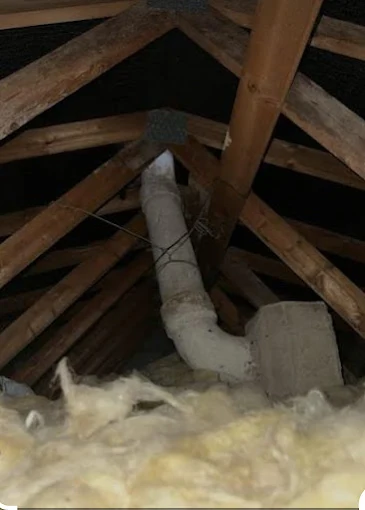
Asbestos flue pipes were widely used in domestic and commercial heating systems installed before the mid-1980s. Found on boiler flues, back boilers, and chimney liners, they are often in poor condition and present a real risk when disturbed. Our team removes them safely with full compliance documentation.
The Risk You Can't See
Asbestos cement flues, commonly found in older heating systems, are prone to degradation over time. Exposure to heat, moisture, and general wear causes the cement matrix to weaken, leading to the release of microscopic asbestos fibres. This process is often exacerbated by vibrations from the heating appliance or routine maintenance activities.
The release of these fibres poses a significant health risk. Inhaling asbestos fibres can lead to severe and often fatal respiratory diseases, including asbestosis, mesothelioma, and lung cancer, which may not manifest for decades after exposure. Protecting occupants and workers from this invisible threat is paramount.
Under the Control of Asbestos Regulations 2012 (CAR 2012), specifically Regulation 4, there is a legal duty to manage asbestos in non-domestic premises. This includes identifying the presence of asbestos, assessing its condition, and implementing a management plan to prevent exposure. For domestic properties, while CAR 2012 doesn't directly apply, the Health and Safety at Work etc. Act 1974 still places duties on employers and those in control of premises to ensure safety.
How Asbestos Flues Degrade and Why Fibre Release Accelerates
Asbestos cement flues typically contain chrysotile (white asbestos) fibres, sometimes mixed with amosite (brown asbestos), embedded within a cement binder. Over decades, the constant thermal cycling from heating and cooling, coupled with condensation and acidic flue gases, causes the cement to become brittle and crack. This degradation allows the tightly bound asbestos fibres to become friable and easily dispersed into the air, particularly during flue inspections, repairs, or removal.
The risk is amplified because these flues are often located in confined spaces, increasing the potential for high fibre concentrations during disturbance. The Health and Safety Executive (HSE) sets a Workplace Exposure Limit (WEL) for asbestos of 0.1 fibres per cubic centimetre (f/cm³) averaged over a 4-hour period, as detailed in EH40/2005 Workplace Exposure Limits.
Proper removal is crucial to prevent widespread contamination. Our process involves careful encapsulation, controlled wetting, and precise sectioning to minimise fibre release. Each step adheres to stringent HSE guidelines, ensuring that the hazardous material is contained and removed without compromising the safety of the property or its occupants.
The HSE estimates 5,000 workers die each year from asbestos-related diseases — more than any other single work-related cause.
A Complete, Compliant Service
Get Your Free Quote Today
No obligation. We'll assess your job, explain the process, and give you a clear written quote — usually within 24 hours.
How We Work
Survey
We identify the flue material and condition, and confirm whether it contains asbestos.
Isolation
The heating system is isolated before any work begins.
Removal
The flue sections are carefully removed, wetted, and bagged for licensed disposal.
Disposal
Waste is transported to a licensed facility and paperwork is issued.
When You Need to Act
Visible damage or cracks on the flue pipe
Act NowRisk of immediate fibre release and widespread contamination, leading to costly remediation and health hazards.
Planning a boiler replacement or heating system upgrade
This WeekFailure to plan for asbestos removal will cause significant project delays and unexpected costs once work commences.
Routine maintenance or inspection reveals an asbestos flue
This MonthDelaying action increases the likelihood of further degradation and potential fibre release, escalating future removal costs and health risks.
Property built before 1985 with original heating system
Plan AheadIgnoring the potential presence of asbestos flues means missing an opportunity to proactively manage a significant health and legal liability.
The Most Expensive Mistake We See
The most expensive mistake when dealing with asbestos flues is attempting DIY removal or using an unqualified contractor. This often leads to widespread fibre contamination, requiring extensive and costly decontamination of the entire property, potentially costing tens of thousands of pounds and exposing occupants to severe health risks.
Why Pro Asbestos Removal
At Pro Asbestos Removal, we understand that flue removal is not just about taking out a pipe; it\'s about meticulously managing a critical contamination risk within a confined space. Our approach prioritises precision and containment, using specialised techniques to ensure zero fibre migration, unlike generic contractors who might overlook the unique challenges of flue degradation.
From Our Recent Work
Common Questions
How do I know if my flue contains asbestos?
Asbestos flue pipes are typically grey, have a slightly rough texture, and are found on older boiler installations. The only definitive way to confirm is laboratory analysis of a sample.
Can a plumber remove an asbestos flue?
No. Asbestos removal requires UKATA-certified operatives. A plumber can disconnect the appliance, but the asbestos flue itself must be removed by a licensed contractor.
Further Reading
What to Expect on Asbestos Removal Day
A step-by-step walkthrough of what happens on the day of your asbestos removal.
Your Asbestos Waste Paperwork: Consignment Notes & WTNs
Understanding the waste transfer paperwork you receive after removal.
Air Clearance & the 4-Stage Clearance Certificate
How the 4-stage clearance procedure works and what your certificate means.
Asbestos Regulations UK
Overview of the key UK asbestos regulations including CAR 2012 and the HSE enforcement framework.
Ready to Get This Sorted?
We cover Surrey, London, and the South East. Call us or request a free quote online — we'll get back to you the same day.
Pro Asbestos Removal · Surrey, London & South East · Mon–Sat 7am–6pm
Areas We Cover
- Croydon — We offer asbestos removal services in Croydon
- Surrey — We offer asbestos removal services across Surrey
- Guildford — We offer asbestos removal services in Guildford
- South London — We offer asbestos removal services across South London
- London — We offer asbestos removal services across London
- Woking — We offer asbestos removal services in Woking
- Banstead — We offer asbestos removal services in Banstead
- Sutton — We offer asbestos removal services in Sutton
- Bromley — We offer asbestos removal services in Bromley
- Epsom — We offer asbestos removal services in Epsom
- Reigate — We offer asbestos removal services in Reigate
- Redhill — We offer asbestos removal services in Redhill