Licensed Artex Asbestos Ceiling Removal, Epsom
Chrysotile-containing Artex stripped from a lounge ceiling under a negative-pressure enclosure, air clearance confirmed below 0.01 f/cm³, and the room handed back for renovation the same day.
Artex Is Not Always Asbestos — But When It Is, It Requires a Licensed Contractor
Not all Artex contains asbestos. Artex manufactured after 1984 is generally asbestos-free, and even pre-1984 Artex was not always formulated with asbestos fibres. However, Artex applied to ceilings and walls in properties built or renovated between the 1960s and early 1980s has a high probability of containing chrysotile (white asbestos), and the only way to confirm this is through laboratory analysis of a sample.
In this Epsom property — a 1970s semi-detached house — the lounge ceiling Artex was confirmed to contain chrysotile at approximately 3% by weight. This concentration is sufficient to make the removal a licensed activity under CAR 2012, requiring HSE notification, a negative-pressure enclosure, and an air clearance certificate before the room can be reoccupied.
The homeowner's contractor had correctly identified the risk and declined to proceed without an asbestos clearance. We were instructed, completed the removal in a single day, and handed the room back for renovation the following morning.
Asbestos-containing Artex is classified as a licensed material under CAR 2012 because it contains chrysotile in a friable matrix — meaning fibres can be released during disturbance. Licensed contractors must hold a current HSE asbestos licence, notify the HSE at least 14 days before work begins, and provide air clearance certificates after removal. Any contractor who offers to remove Artex without these requirements is working illegally.
Read the Regulations Guide →How the Project Was Delivered
Refurbishment Survey & Sample Analysis
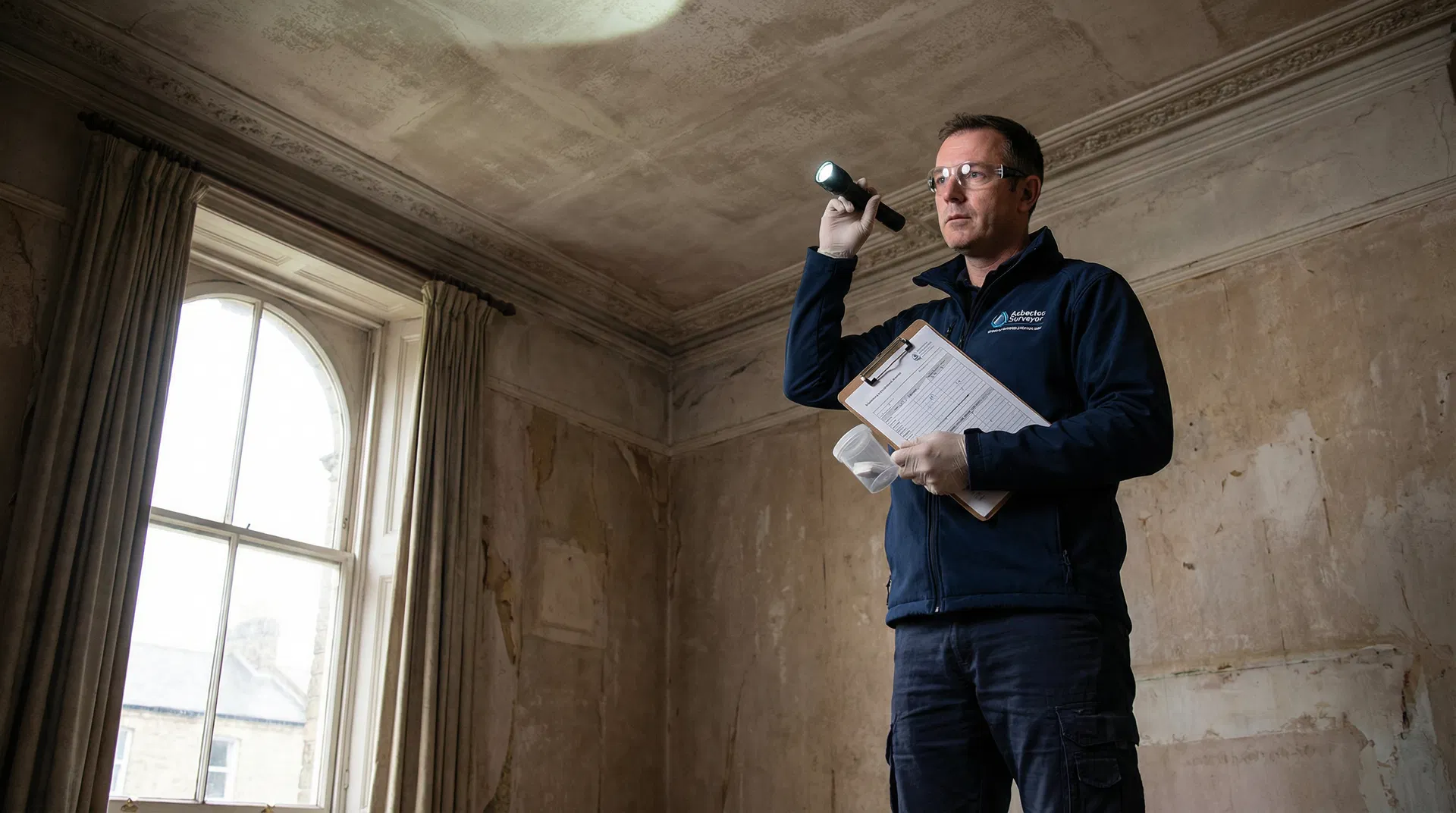
The homeowner was planning a full lounge renovation — new ceiling, plastering, and decoration — and had been advised by their contractor to have the Artex tested before any work began. Our surveyor attended site and took samples from three locations across the ceiling. The samples were submitted to our UKAS-accredited laboratory and results confirmed the presence of chrysotile (white asbestos) at approximately 3% by weight — sufficient to trigger a licensed removal requirement under CAR 2012.
Notification & Method Statement
Because the Artex contained chrysotile and the removal would involve disturbing more than one square metre of material, the work was notifiable to the Health and Safety Executive under Regulation 9 of CAR 2012. Our notification was submitted 14 days before the removal date. A full method statement and risk assessment were prepared and shared with the homeowner before works commenced.
Negative-Pressure Enclosure
On the day of removal, the lounge was prepared before any disturbance of the Artex. All furniture was removed from the room and the doorways sealed with polythene sheeting and duct tape. A negative-pressure enclosure was erected, with HEPA-filtered air extraction units running throughout the works. The negative pressure ensures that any airborne fibres released during removal are drawn towards the extraction units rather than escaping into the rest of the property.
Wet-Scraping Removal
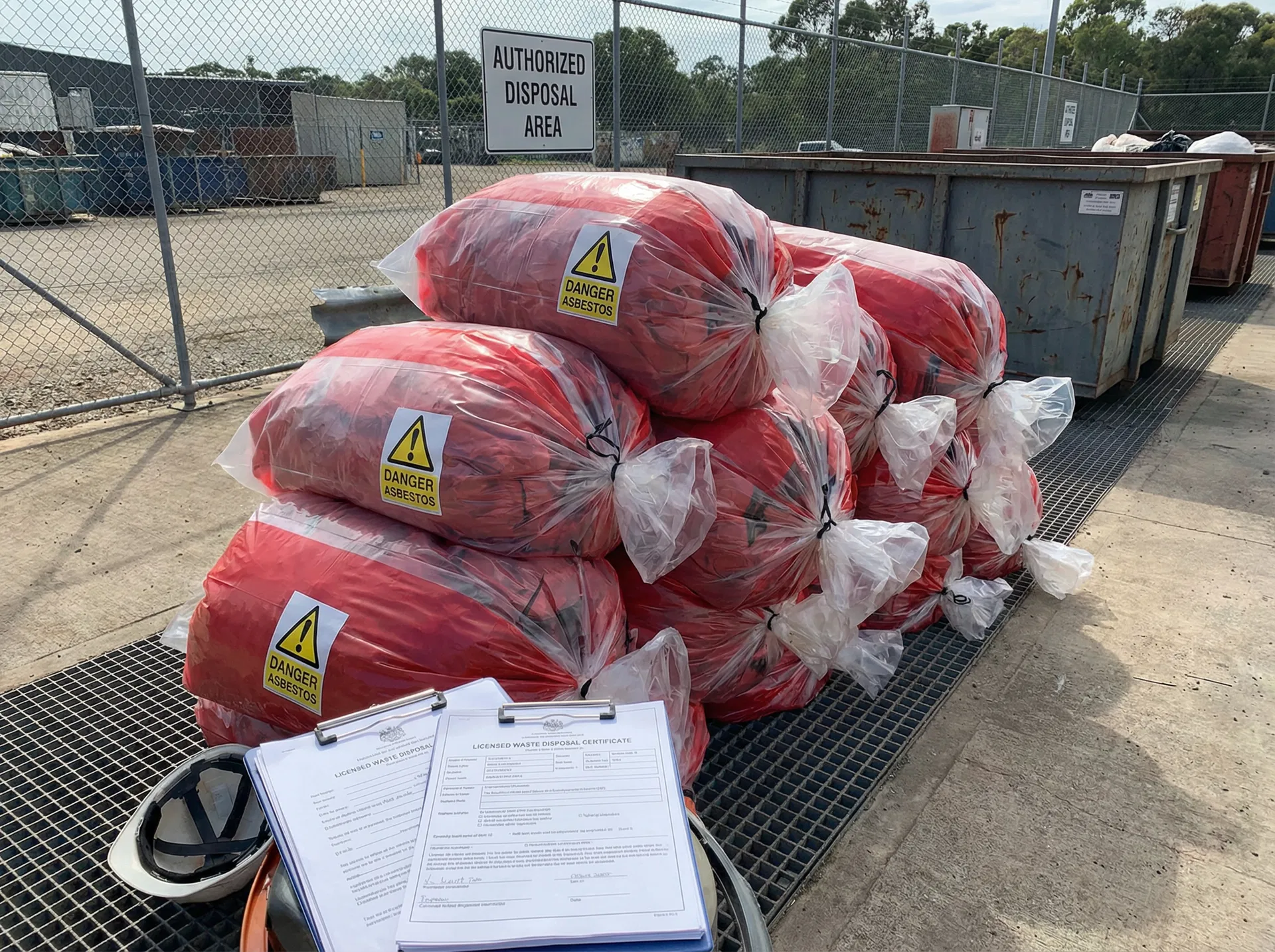
The Artex was removed using wet-scraping techniques. The ceiling was wetted in sections using a fine mist spray to suppress any fibre release before the scraping tool was applied. Working in controlled sections, the full ceiling was stripped back to the substrate. All waste — the wet Artex debris — was collected directly into double-lined asbestos waste sacks and sealed inside the enclosure before being removed from the building.
Four-Stage Visual Inspection & Air Clearance
Following removal, a four-stage visual inspection was carried out inside the enclosure: a general visual check, a thorough inspection with adequate lighting, a check of all surfaces including the walls and floor, and a final check before the enclosure was struck. An air clearance reading was then taken. The result — 0.008 f/cm³ — was below the 0.01 f/cm³ clearance indicator, confirming the room was safe for unrestricted use.
Documentation & Renovation Handover
The air clearance certificate, disposal documentation, and a letter of completion confirming the licensed removal had been carried out in accordance with CAR 2012 were provided to the homeowner on the same day. The contractor was able to begin the ceiling renovation the following morning. The homeowner's renovation proceeded on schedule with no delays attributable to the asbestos removal.
Renovation Proceeded the Following Morning
My builder told me I needed a licensed contractor before he could touch the ceiling. Pro Asbestos Removal came out quickly, explained everything clearly, and did a brilliant job. The room was cleared and certified the same day. My builder was back in the next morning. Couldn't have been smoother.
We test, notify the HSE, and remove — all in one. Surrey and South London.
07345 062075Get a Free Quote