Asbestos Cold Water Storage Tank Removal, Bromley
Asbestos cement cold water tank sectioned by hand in the loft void, removed through the hatch, air clearance confirmed, and the loft handed back for conversion works — all within half a day.
The Tank That Was Blocking a Loft Conversion
Asbestos cement cold water storage tanks were a standard installation in UK housing from the 1950s through to the early 1980s. They were manufactured from the same chrysotile-reinforced cement used for garage roofs and shed panels — durable, inexpensive, and, as was later discovered, a source of asbestos exposure risk if disturbed. Many remain in loft voids today, often forgotten until a loft conversion or plumbing upgrade brings them back into focus.
In this Bromley property, the tank had been out of use for several years following a mains pressure conversion. The loft conversion architect had correctly identified it as a potential asbestos hazard and flagged it as a prerequisite for the structural works. The tank was too large to remove whole through the standard loft hatch, requiring careful sectioning in situ.
Angle grinders, circular saws, and reciprocating saws generate fine dust that carries asbestos fibres deep into the lungs. In a confined loft space, this dust has nowhere to go. Hand tools — used with wet suppression — are the only acceptable method for sectioning asbestos cement in an enclosed space. Any contractor proposing power tool removal of an asbestos cement tank should not be instructed.
How the Project Was Delivered
Pre-Removal Survey & Water Isolation
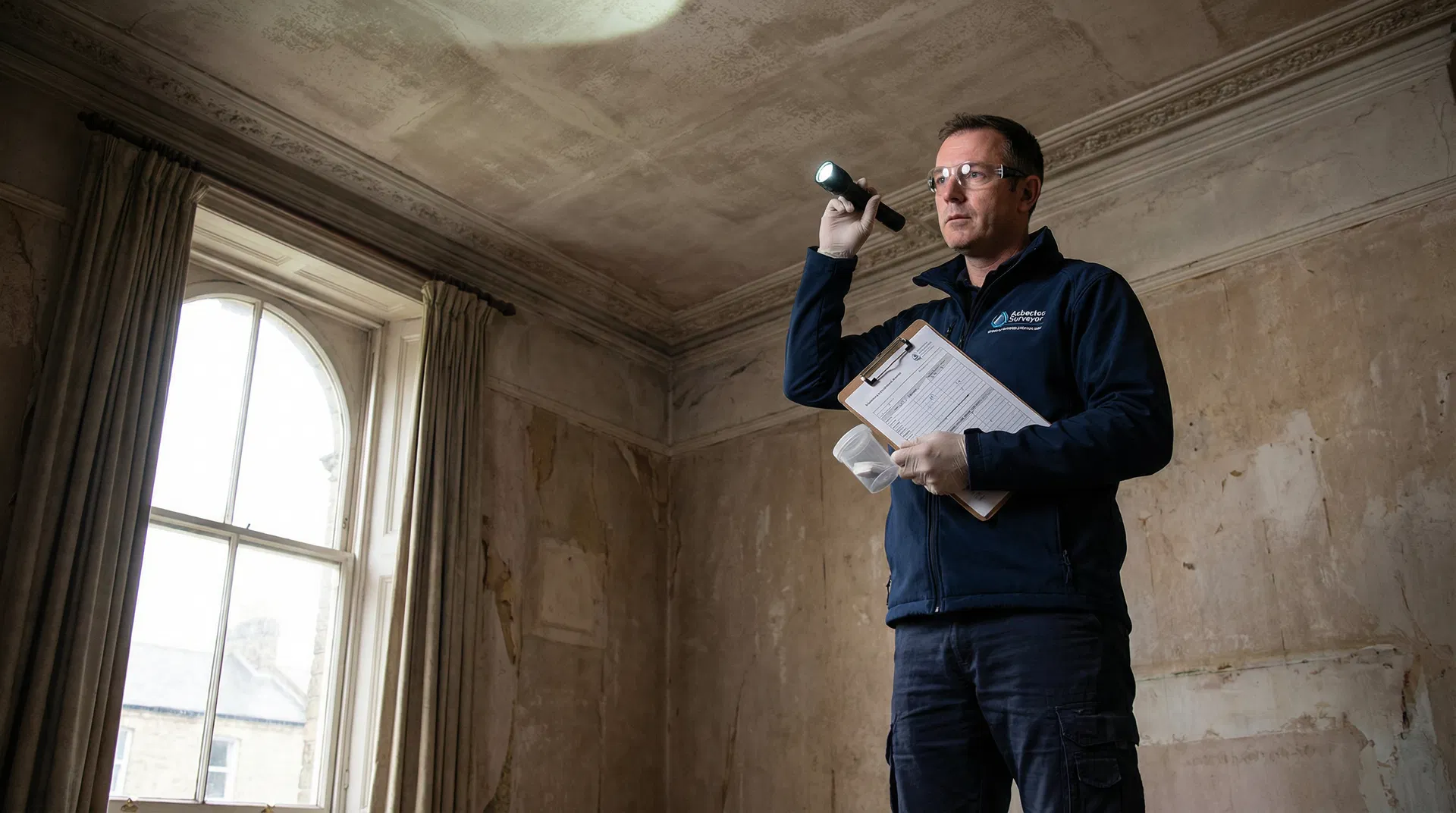
The homeowner had instructed a loft conversion architect who had flagged the presence of an asbestos cement cold water storage tank in the loft void. The tank needed to be removed before any structural work could begin. Our surveyor confirmed the tank was asbestos cement and assessed the loft access — a standard 450mm × 600mm hatch, which was sufficient for removing the sectioned tank in manageable pieces. The water supply to the tank was isolated and the tank drained before any removal work began.
Loft Preparation & Containment
The loft hatch opening was sealed with polythene sheeting to prevent any fibres from entering the living areas below during the removal. Polythene was also laid across the loft floor around the tank to capture any debris. The removal team worked in full PPE including half-face respirators with P3 filters throughout the works.
Tank Sectioning — Hand Tools Only
Asbestos cement tanks cannot be removed whole through a standard loft hatch — they are typically too large. The tank was sectioned using hand tools only: no power tools, no angle grinders, no reciprocating saws. Power tools generate significant quantities of fine dust and dramatically increase fibre release. Each section was wetted before and during cutting, and removed from the loft individually.

Bagging, Sealing & Loft Decontamination
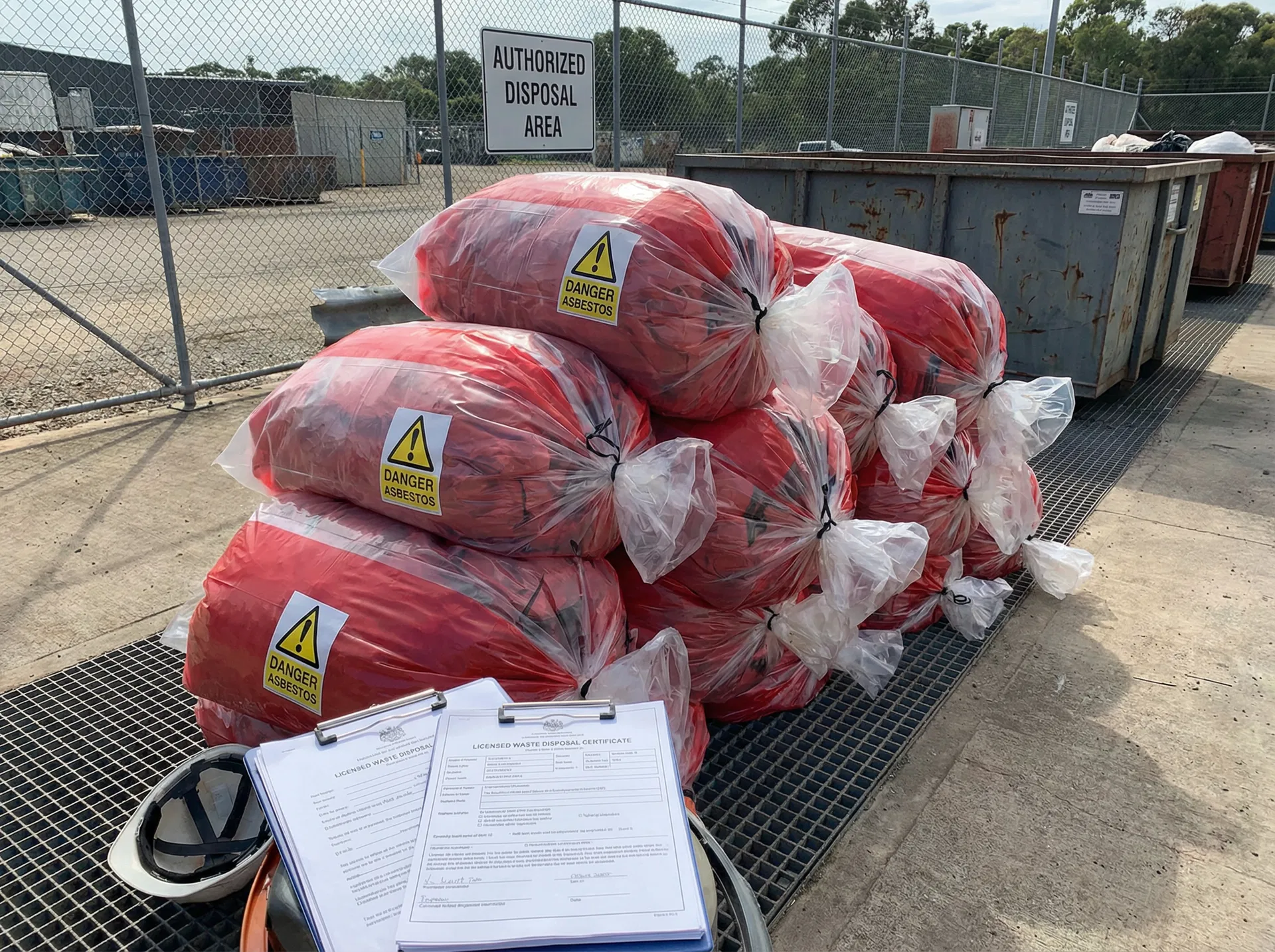
Each section of the tank was double-bagged in UN-approved asbestos waste sacks and sealed immediately after removal from the loft. Once all sections were removed, the loft void was decontaminated — all surfaces were wiped down and the polythene sheeting was carefully folded inward and removed. An air clearance reading was taken in the loft void before the hatch polythene was struck.
Air Clearance & Documentation
The air clearance reading confirmed the loft void was safe for unrestricted access. The clearance certificate, disposal documentation, and a letter of completion were provided to the homeowner on the same day. The loft conversion architect was copied in on the documentation. Structural work on the loft conversion began the following week.
Loft Conversion Unblocked
The loft conversion couldn't start until the tank was gone. Pro Asbestos Removal came out quickly, explained the process clearly, and had it done in a few hours. The loft was certified clear the same day. Our builder was very impressed with how professionally it was handled.
We remove it safely. Surrey and South London.
07345 062075Get a Free Quote